How to Calculate Real ROI on Fixed-Price Liquidation Pallets

B-Aftermarket Team
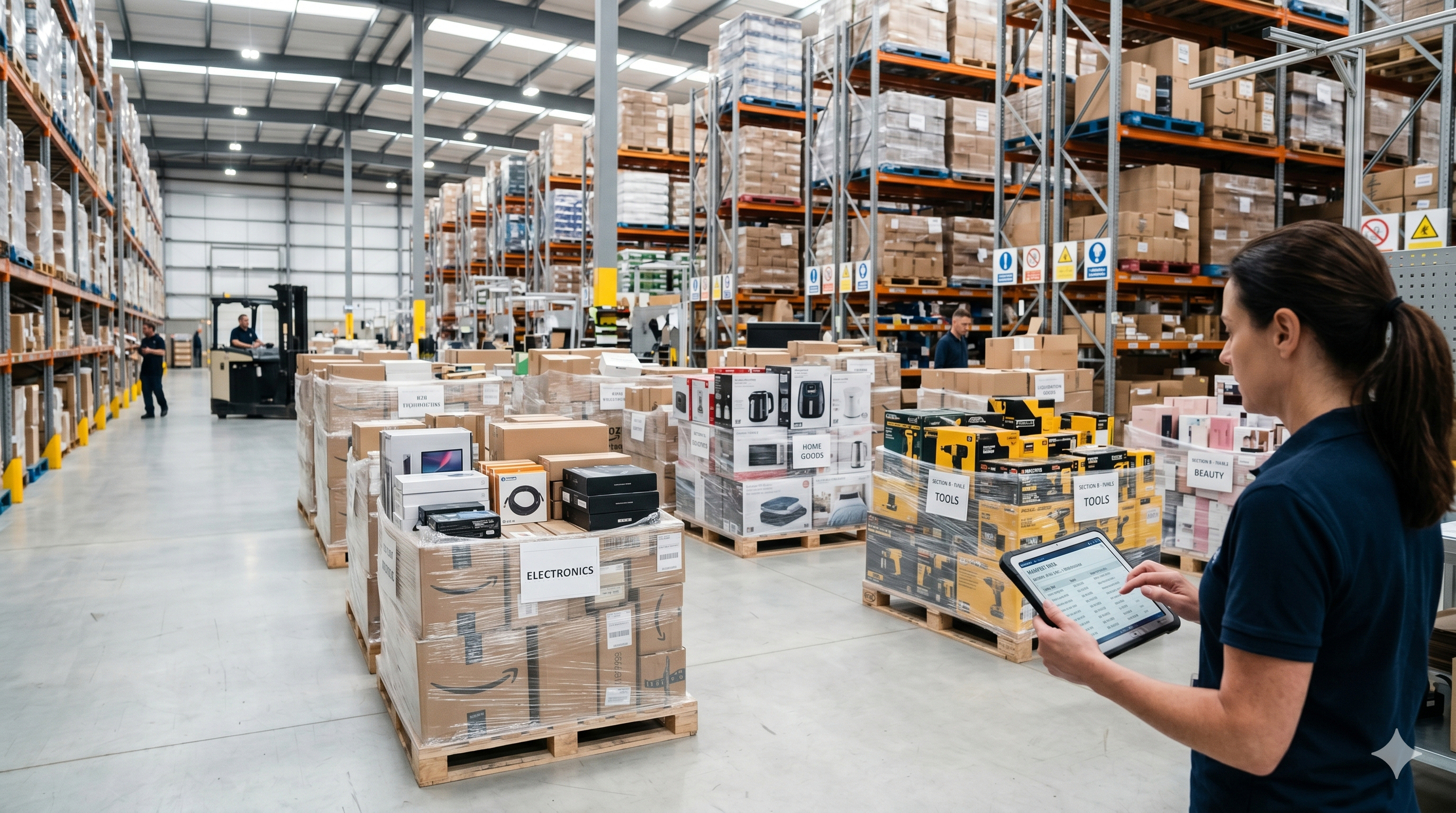
The global B2B recommerce market has evolved into a high-precision infrastructure. For professional resellers, sourcing liquidation pallets at fixed prices provides a strategic advantage: predictability. Unlike the uncertainty of auctions, buying at a fixed price allows you to lock in your margins the moment you see a profitable deal.
At B-aftermarket.com, we simplify the secondary market. We source massive volumes from tier-1 retailers and break them down into manageable, fixed-price pallets so you can scale your business without the stress of bidding wars. This guide will teach you how to audit manifests and secure your inventory with technical precision.
1. Understanding the Asset: Grading Systems and Manifests
In the fixed-price model, speed is key. To buy quickly, you must trust the Condition Codes and the manifest. Knowing exactly what is inside a pallet allows you to pull the trigger before your competitors do.[1, 2]
- New (Overstock): Brand new items, original packaging. Lowest risk, highest resale value.[1]
- Like New / Open Box: Often high-quality returns due to "buyer’s remorse." Minimal use, though packaging may be distressed.[2]
- Refurbished (Grade A/B): Professionally tested and restored. Essential for electronics where functionality is a non-negotiable requirement.
- Used (Good/Fair): Functional items showing visible wear. These offer higher margins but require more processing time.[1]
- Salvage: Non-functional items sold for parts. Best suited for technical specialists.
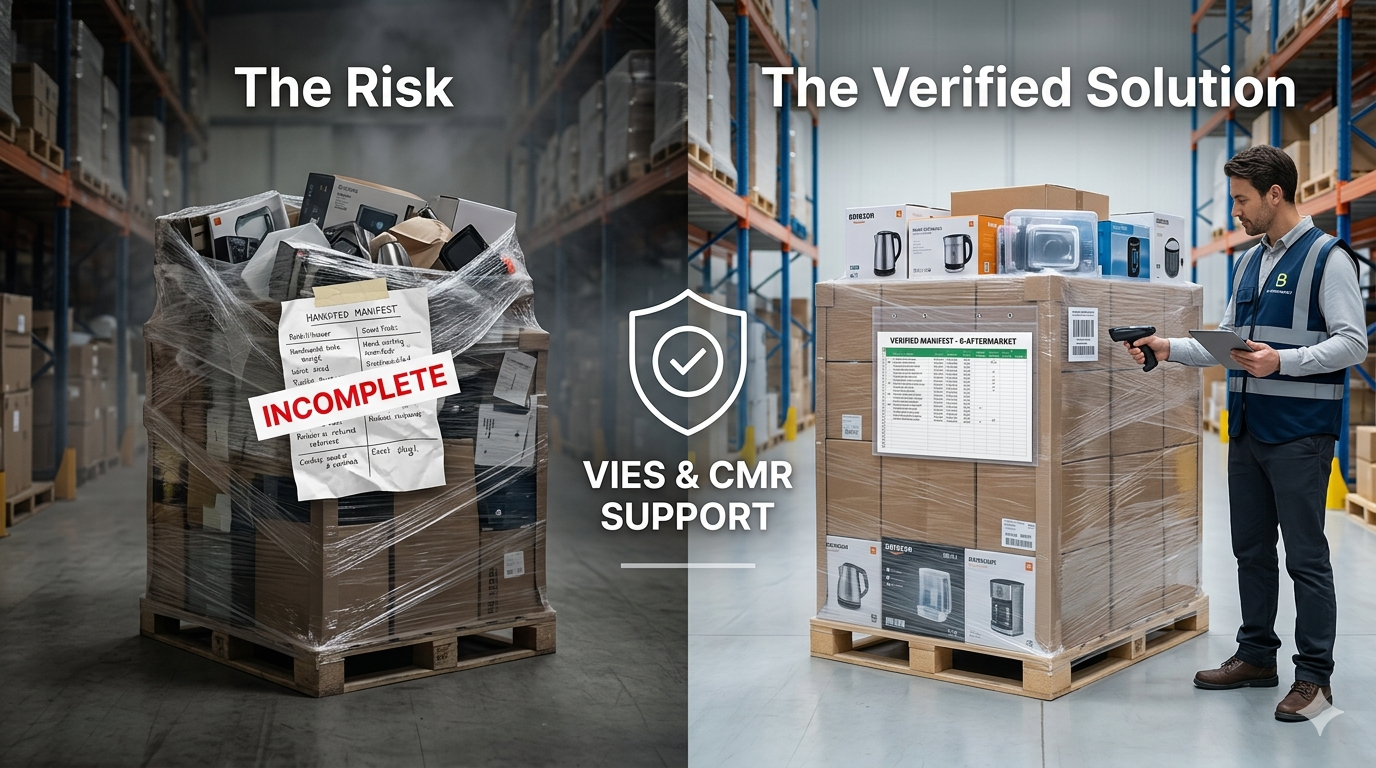
The Manifest Advantage: Every B-aftermarket pallet comes with a detailed manifest.[3] Use it to cross-reference current market prices on marketplaces to ensure the fixed price fits your ROI goals.
2. The Profit Formula: Calculating Your True ROI
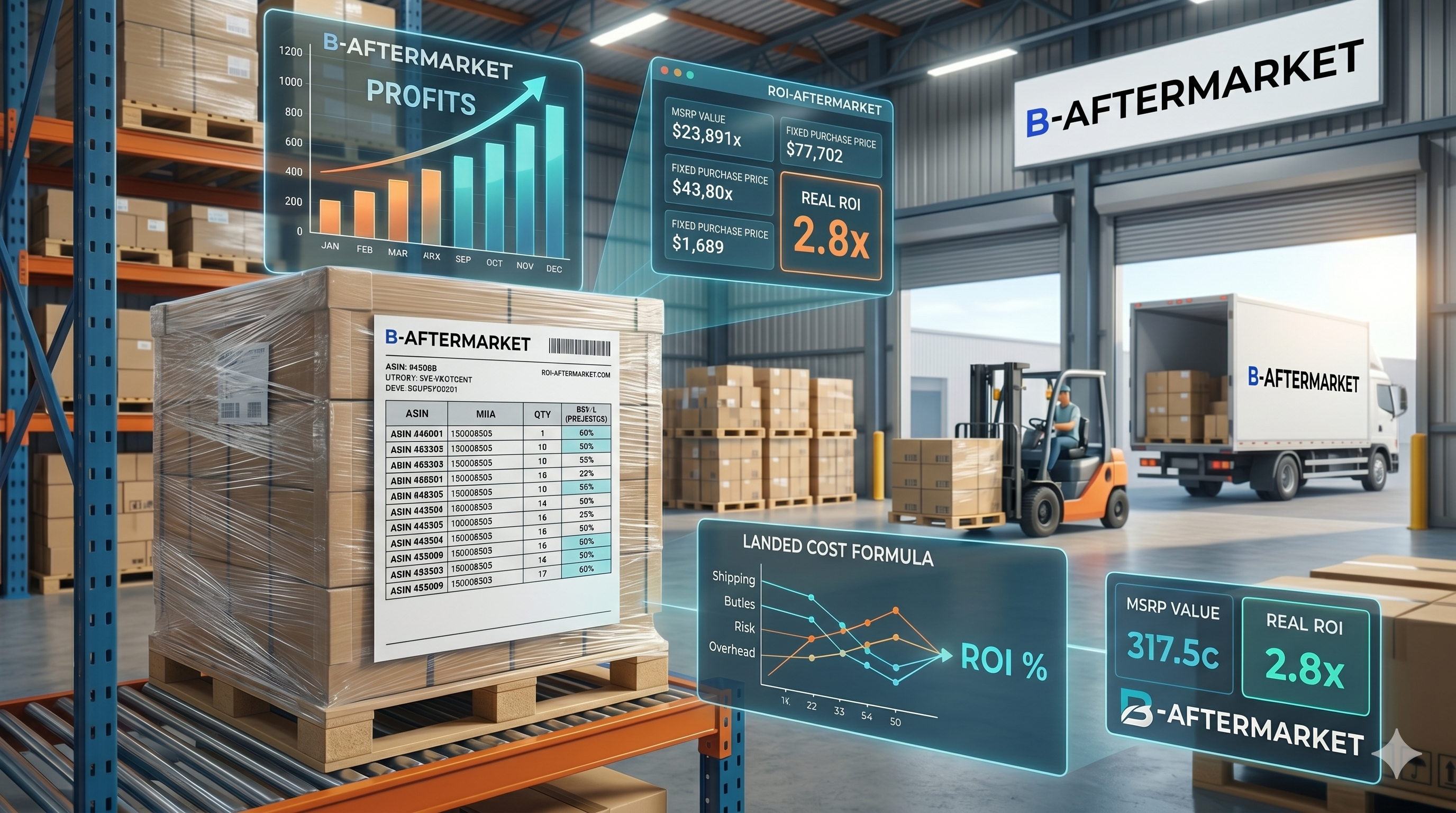
Profitability in the liquidation business is determined at the point of purchase, not the sale. Since our prices are fixed, your Landed Cost calculation becomes much more accurate.[4] Use this formula to evaluate every pallet:
$$LC_u = \frac{P_c + S_f + C_d + R_q + O_w}{U_t}$$
Where:
- $P_c$: Fixed Purchase Price.
- $S_f$: Shipping & Freight.[5]
- $C_d$: Duties & Taxes.
- $R_q$: Risk factor (15-20% buffer).[6]
- $O_w$: Overhead (Labor/Storage).
- $U_t$: Total units in manifest.
Pro Tip: Successful resellers typically look for a 2.5x to 3x return on the usable portion of a pallet.[7] Fixed pricing eliminates "bid creep," ensuring your projected margins remain intact.
3. Logistics: Don't Let Shipping Kill Your Margin
Freight is your biggest variable cost. En a fixed-price environment, knowing your costs upfront allows for instant decision-making.[5, 8]
- LTL (Less-than-Truckload): Ensure you have a loading dock or forklift to avoid Liftgate Fees ($50-$150 extra).[5]
- Commercial vs. Residential: Always ship to a commercial address; residential surcharges eat into your profit.[9]
- Volume Consolidation: Buying 2 or 3 pallets at once often reduces the shipping cost per unit significantly.[8]
4. 5 Pitfalls of Pallet Reselling (And How to Avoid Them)
- Indecision: High-demand, fixed-price pallets sell fast. If the math works, buy immediately.
- MSRP Obsession: Retail price is just a reference. Always check "Sold" listings for real current value.[4]
- Ignoring Seasonality: Buying out of season is great for discounts, but only if you have the cash flow to hold stock.[10]
- Cherry-Picked Inventory: Beware of "untested" sources. We provide verified manifests to guarantee transparency.[11]
- Labor Underestimation: Sorting and listing 50 items takes time. Factor your hourly rate into the formula.
5. Ready to Source?
Fixed-price sourcing is the most efficient way to grow a professional resale business. Eliminate risk and focus on making sales.
BROWSE CURRENT PALLETS