How to Evaluate Amazon Return Pallets: A Step-by-Step Guide

B-Aftermarket Team
Buying Amazon return pallets is a highly profitable way to source inventory for your online resale business. However, without the right evaluation process, it can quickly become a drain on your capital. The difference between a successful investment and a costly mistake comes down to one crucial element: how thoroughly you evaluate the data before making a purchase.
In this step-by-step guide, we will show you exactly how to analyze a pallet manifest like a professional buyer, ensuring you secure high-margin, unfiltered inventory with zero surprises.
Step 1: Demand an Itemized Excel Manifest
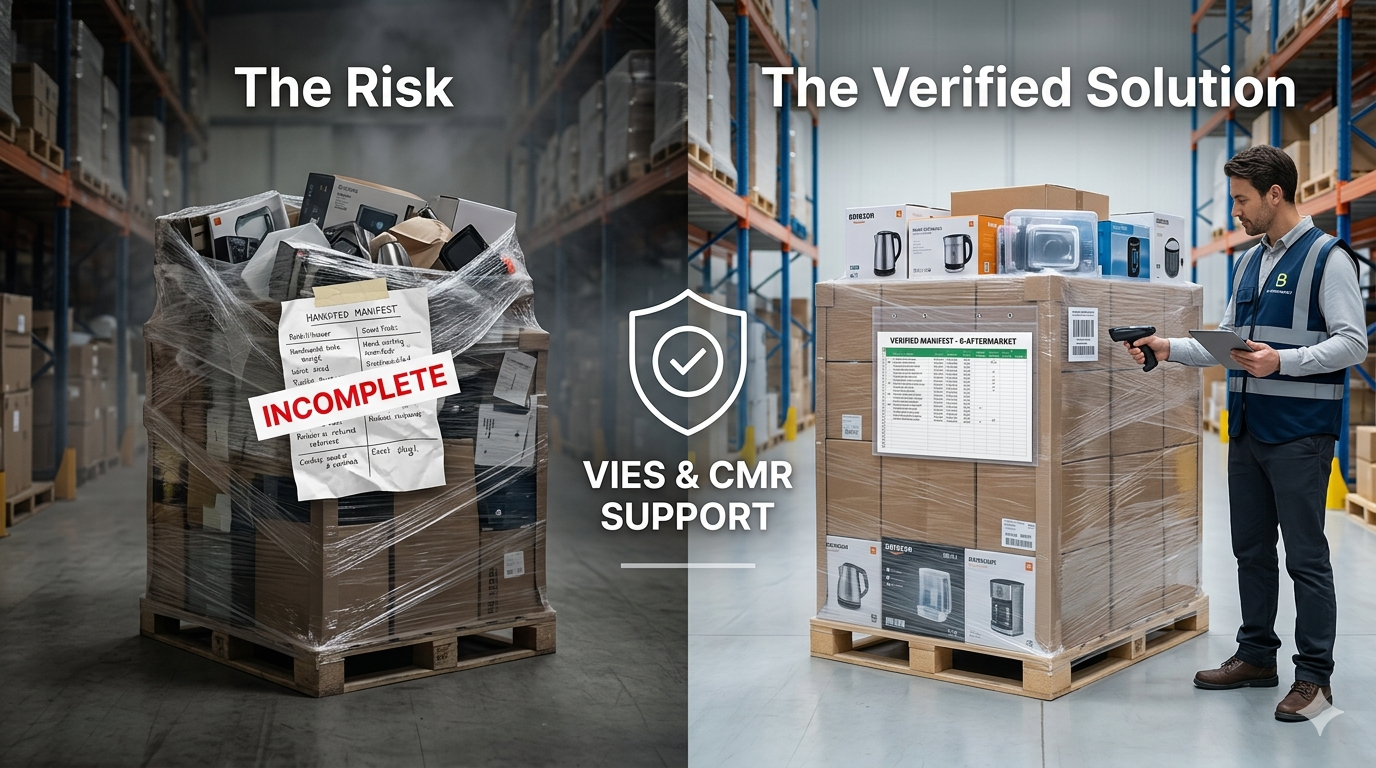
Never buy a "mystery pallet" or make a decision based on a generic category description. The very first step in your evaluation is securing a comprehensive data sheet. A professional supplier will provide an Excel manifest detailing every single unit on that physical pallet. If a broker hides the data or refuses to provide a line-by-line breakdown, walk away. Data transparency is your only true risk mitigation.
Step 2: Look for Interactive Data (ASINs & LPNs)
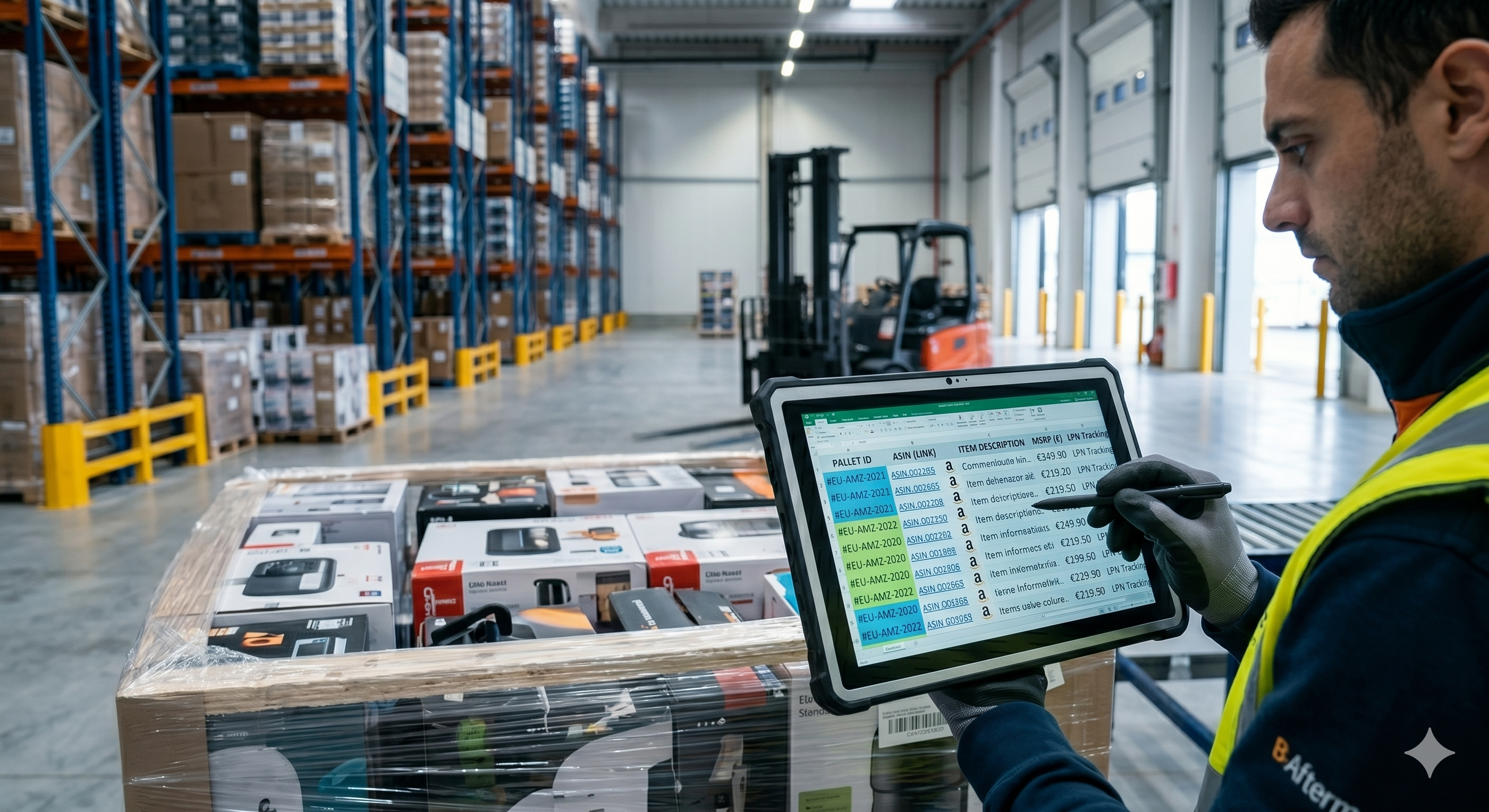
A static PDF is useless for fast research. A high-quality manifest should include an ITEM DESC column featuring a direct hyperlink to Amazon generated using the ASIN. This allows you to instantly check the current "Buy Box" price, customer reviews, and market demand with a single click. Additionally, ensure the manifest includes LPN (License Plate Number) tracking for every unit so you can trace items from the spreadsheet directly to your warehouse shelves without losing inventory.
Step 3: Analyze Retail Prices for Instant ROI
Time is money when processing liquidations. Your manifest should make ROI calculation effortless. Look for spreadsheets that automatically sort the Retail Price from highest to lowest. This structure allows you to immediately see if the top 10% of high-ticket items will cover your entire landed cost, leaving the rest of the pallet as pure profit.
Step 4: Verify the Visual Organization
When buying multiple pallets, logistics can get messy. The best manifests are visually optimized for your warehouse team. They should group the data by PALLET ID and color the cells for each pallet differently. This means before the truck even arrives, your team knows exactly what is on every physical wooden pallet, drastically speeding up the intake and sorting process.
Step 5: Confirm Unfiltered Stock & EU Logistics
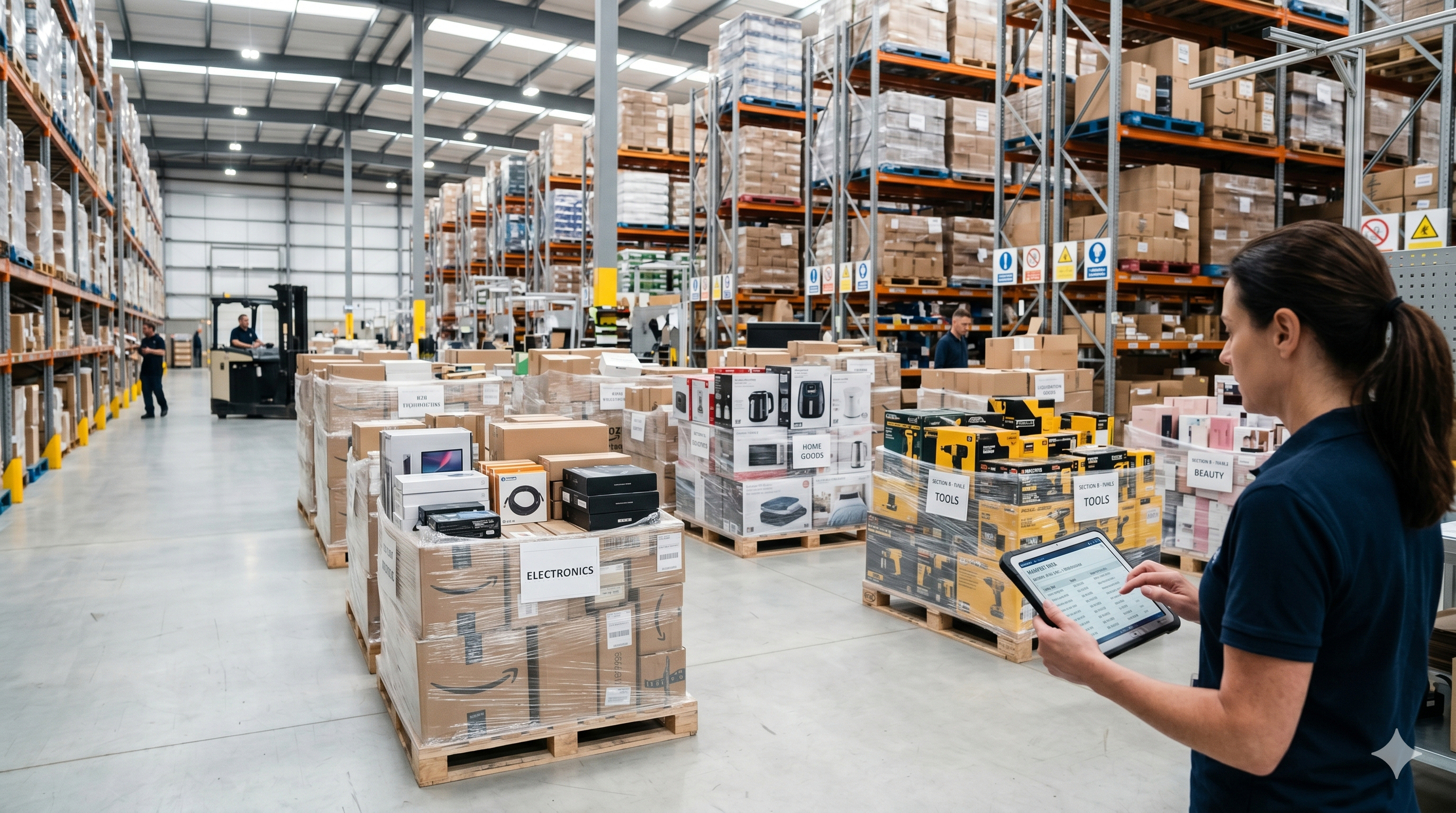
Finally, ensure the pallets are sold completely untouched. Avoid brokers who "cherry-pick" the most valuable items. You want direct access to unfiltered Amazon returns. Couple this with a supplier that offers direct B2B shipping across the 27 EU countries and provides VIES-compliant invoicing for seamless VAT-exempt transactions.
Ready to put this guide into practice?
At B-Aftermarket, we build our manifests exactly like this. Stop guessing and start analyzing with professional data.
View Available Pallets & Manifests